Babies grow so quickly. One minute, you are holding your newborn in your arms. Before you know it, those tiny clothes no longer fit, and your little one is reaching new milestones. That is why I love collecting baby keepsake box ideas. A keepsake box gives you a special place to save the little things that tell your child’s story. You can keep their first outfit, hospital bracelet, photographs, and handwritten letters. These items may seem ordinary today, but they can mean so much years later.
For me, preserving memories has a deeper meaning. I lost my father when I was very young. As I grew older, I sometimes struggled to picture what he looked like at different stages of his life. Thankfully, the photographs in his memory box helped me see him as a younger man. He had saved different chapters of his life, and those pictures gave me something precious to hold on to.
My children, Kamara and Kamsi, also remind me why these memories matter. Whenever I bring out their picture frames and tiny shoes, they laugh and wonder how they could ever have been that small.
With my youngest, Dinaella, I became even more intentional. I saved her umbilical cord stump in a safe place because I had seen how much my older children valued their memory boxes.
You do not need an expensive box to start. You only need a few meaningful items and a safe place to keep them. Here are 18 baby keepsake box ideas to help you preserve those special moments.

1. Your Baby’s First Photographs
Photographs are some of the easiest keepsakes to collect. They capture little details that change quickly, such as your baby’s tiny fingers, sleepy smiles, and first expressions.
Start with your baby’s first photograph and a picture taken when you brought them home. You can also add a few monthly pictures from their first year.
Write the date and your baby’s age on each photograph. You could also add a short note about what was happening that day. Even simple pictures taken at home can become treasured memories.
2. A Pregnancy or Adoption Journal
Your baby’s story often begins before their arrival. A pregnancy or adoption journal helps you preserve that beginning.
You can write about discovering your pregnancy, choosing names, preparing for your baby, or waiting to welcome your child through adoption. Include your hopes, feelings, and special moments along the way.
You do not have to write every day. A few honest sentences are enough. You can also add photographs and notes from important appointments.
When your child is older, they may enjoy reading about how their story began. If you are preparing to share your pregnancy news, take a look at these pregnancy announcement ideas.

3. Ultrasound Scans and Pregnancy Photographs
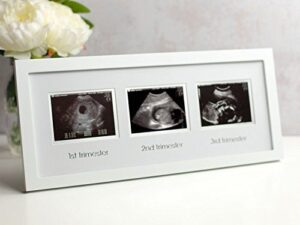
Ultrasound scans can be among the first pictures you have of your baby. Even when the images are difficult to understand, they may remind you of the excitement you felt before meeting your little one.
Keep your scans in protective sleeves. Label them with the date or stage of pregnancy so you can remember when each one was taken.
You can also include pregnancy photographs that show how your family prepared for the new arrival. Some ultrasound prints may fade over time. Therefore, consider making digital copies and saving them securely.
4. Your Baby’s Hospital Identification Bracelet
A hospital identification bracelet may look like a simple piece of plastic. However, it can remind you of the day your baby arrived.
Save the bracelet in a clean, labelled envelope. You could also include your baby’s birth date and a short note about your first meeting.
If you kept your own hospital bracelet, place it beside your baby’s. This can make the keepsake even more meaningful.
Before storing the bracelet, make sure it is dry. Keep it away from moisture and anything that might rub off the printed details.
 b
5. Your Baby’s First Outfit and Tiny Shoes
Your baby’s first outfit can bring back memories of just how small they once were. You might save the clothes they wore home from the hospital or a special outfit from their naming ceremony.
Tiny shoes are another lovely addition. Choose a pair that reminds you of a particular stage in your baby’s life.
Before storing clothing, wash it according to the care label. Make sure it is completely dry before putting it away. You can wrap delicate items in suitable acid-free tissue or place them in a clean fabric storage bag.
When Kamara and Kamsi see their tiny shoes, they laugh and wonder how they could ever have been that small. Those moments remind me that ordinary objects can become precious memories.
6. Handprints and Footprints
Handprints and footprints help you remember how tiny your baby’s hands and feet once were. You can make paper prints with a baby-safe ink product or use a suitable keepsake kit.
Always follow the product instructions and choose a method that is safe for your baby’s age.
Write your baby’s name and the date on the back. If you have more than one child, you could make a print for each of them.
Keep paper prints in protective sleeves. If you use a clay kit, allow the impression to dry or cure fully before storing it. Later, you can compare the prints and remember how much your little one has grown.

7. Your Baby’s Umbilical Cord Stump
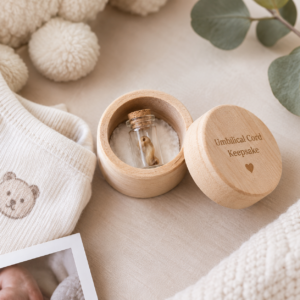
Some families choose to keep a dried umbilical cord stump as a personal or cultural keepsake. For them, it represents the beginning of their baby’s life.
I chose to preserve Dinaella’s umbilical cord stump in a safe place. I had not done the same with my older children. However, seeing how much they valued their memory boxes made me more intentional about saving special items for my youngest.
This is a personal choice, and you do not have to keep one. If you choose to do so, wait until it has detached naturally and is completely dry. Place it in a clean, securely closed container, away from moisture and heat. Keep it out of children’s reach. If you are unsure how to handle or preserve it, ask your healthcare professional for advice.
8. Baby’s Birth Documents
Your baby’s birth documents are another meaningful addition to a keepsake box. I would keep a copy of the birth announcement, hospital records you wish to preserve, and any special cards that celebrate your baby’s arrival.
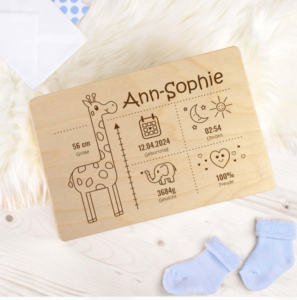
You can also include a hospital birth card, a welcome-to-the-world note, or a milestone card announcing your baby’s birth date, time, weight, and length. These little details may seem ordinary now, but they can become precious memories as your child grows.
To keep everything organised, place the papers in a labelled envelope or document sleeve inside the box. Store important original documents separately in a safe place, and keep only copies in the keepsake box.

9. Letters to Your Child
Writing letters to your baby is a beautiful way to preserve your feelings. You could write one on the day they are born and another on their first birthday.
Tell your child what you hope for their future. You can also write about their little habits, the things that made you smile, and how you felt watching them grow.
Do not worry about making every letter perfect. Write as naturally as you would speak to someone you love.
Date each letter and place it in an envelope. Your child may enjoy reading these messages when they are older. They will get to see what life was like during their earliest years.

10. Cards and Messages from Loved Ones
When a baby arrives, family and friends often send cards and messages. These notes can remind you of the people who celebrated your child’s arrival.
Keep messages from grandparents, close friends, and other people who hold a special place in your family. You do not need to save every card. Choose the ones that mean the most to you.
If a meaningful message was sent online, you can print a copy and place it in the box. Remember to add the sender’s name and date if they are not already clear.
Years later, these messages may help your child understand how many people were excited to welcome them.
11. Family Photographs with Parents and Grandparents
Your keepsake box can tell your family’s story, too. Save photographs of your baby with their parents, siblings, grandparents, and other loved ones.
You might include your first family photograph or a picture from a visit with grandparents. Everyday moments at home are worth saving as well.
This idea means a lot to me because I lost my father when I was very young. The photographs he preserved helped me see parts of his life that I could not remember clearly.
That experience taught me how valuable family photographs can become. Add names and dates to your pictures. You can also write a short note explaining who is in the photograph and why the moment mattered.

12. A Naming Ceremony or Special Family Occasion Keepsake
If your family celebrated your baby’s arrival with a naming ceremony, dedication, christening, or another cultural occasion, save a few items from the day.
You could keep an invitation, programme, name card, or photograph. A small item connected to a family tradition may also be meaningful.
Write a note explaining why the occasion mattered to your family. You could also record the meaning of your baby’s name or mention relatives who attended.
These details will help your child understand the traditions and people that formed part of their early life.
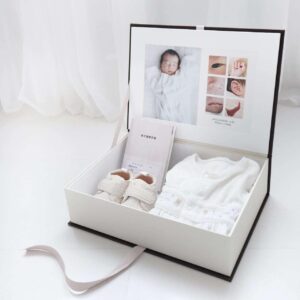
13. A First Christmas Keepsake
Your baby’s first Christmas can be a lovely milestone to remember. You might save a festive photograph, a small ornament, or a gift tag from a special present.
Write the year and your baby’s age on a note. This will help you remember the occasion when you look through the box later.
If your family celebrates other holidays, you can use the same idea for those occasions. Choose items that are easy to store safely, and wrap fragile ornaments carefully.
You only need one or two meaningful keepsakes. There is no need to fill your box with every decoration from the celebration.
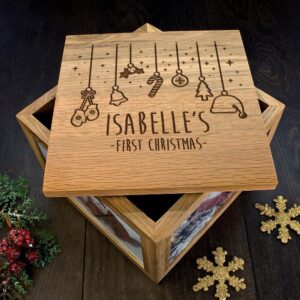
14. A Baby Growth Chart or Milestone Record
A growth chart or milestone record helps you remember how your baby changed during their first year.
You can record special moments such as your baby’s first laugh, first outing, or first steps. Photographs can also help you see the changes from one stage to another.
There is no need to record every day. Focus on the moments that meant the most to your family.
You can add short notes about your baby’s personality, favourite activities, or funny expressions. These details may seem small now, but they can bring back lovely memories later.

15. Your Baby Shower Guest Book or Messages
If you had a baby shower, keep the guest book or a few handwritten messages from your guests. These notes may contain wishes for your baby, kind words for you, or advice for your new journey as a parent.
You could also include a photograph from the celebration. Add a note about who attended and what made the day special.
If you did not have a guest book, do not worry. Cards and messages from friends and family can serve the same purpose.
If you are planning a baby shower for someone else, you may enjoy these baby bathtub gift basket ideas, unique baby shower gifts for a baby girl, and affordable baby shower gifts for a baby boy.
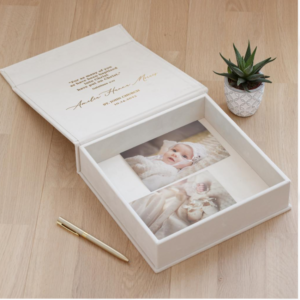
16. A First Mother’s Day or Father’s Day Keepsake
A parent’s first Mother’s Day or Father’s Day with a new baby can be a special milestone.
You might save a card, a handmade gift, or a photograph from the day. Even a simple picture of you holding your baby can become a lovely reminder.
You could also write a few sentences about what becoming a parent meant to you. Describe how you felt or what made the day memorable.
These keepsakes can help your child understand how much their arrival changed your family’s life.
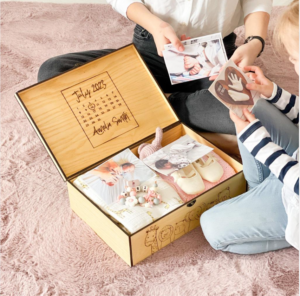
17. Your Baby’s First Tooth or a Lock of Hair
A first tooth or a small lock of hair can be a tiny but meaningful keepsake.
If you save a lock of hair from your baby’s first haircut, place it in a small, labelled envelope. Add the date and your child’s age.
For a first tooth, use a clean, dry, securely closed container. Keep it away from moisture and out of reach of young children.
You do not need to save every tooth or every haircut memento. One item connected to a special milestone may be enough.
Add a short note about the moment. This will help you remember when the tooth fell out or when your baby had their first haircut.
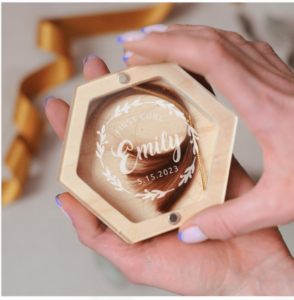

18. A First-Year Memory Timeline
A first-year memory timeline brings your baby’s story together in one place.
Start with their birth and add important milestones throughout the year. These might include their first smile, first laugh, first outing, and first birthday.
You can use a notebook, printed pages, or a collection of dated photographs. Add a few keepsakes beside the moments they represent.
For example, you could place a hospital bracelet beside your baby’s birth entry. A photograph could accompany a note about their first smile.
You do not need to record every day. A simple timeline of meaningful moments is enough to help you remember how your baby’s story unfolded.
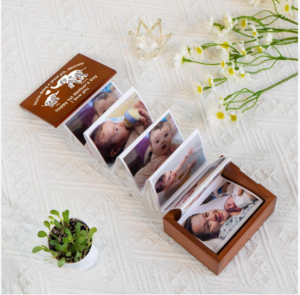
How to Organise Your Baby Keepsake Box
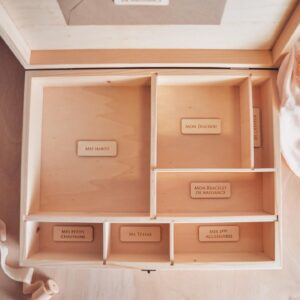
Once you start collecting memories, a little organisation will help you protect them and find them easily later. Choose a sturdy, clean box with enough room for your most meaningful items. It does not need to be expensive or elaborate; what matters is that it protects the contents and is easy to store safely.
Group photographs, paper keepsakes, clothing, and small objects in separate labelled envelopes or protective folders. Add dates and short notes so you remember the story behind each item. Keep delicate papers and photographs away from moisture and direct sunlight, and store clothing only when it is clean and completely dry. Choose a cool, dry location away from damp walls and places where water could reach the box.
For more detailed advice on protecting family photographs and papers, read the U.S. National Archives guide to storing family papers and photographs. You can also make digital copies of important photographs and documents, giving you another way to preserve the information if the originals are damaged.
Most importantly, do not feel pressured to save everything. You are allowed to choose the items that matter to you and leave the rest behind. If you are preparing for a new baby, you may also like these nesting basket ideas for new moms. For practical ways to support a new mother, explore these mom survival basket ideas.
Making Room for the Baby Keepsake Box Memories That Matter
A baby keepsake box does not have to be expensive, perfect, or filled with dozens of items. It only needs to hold the memories that matter to you and your family. You can begin with a photograph, a tiny outfit, or a handwritten note and add other keepsakes as your child grows.
Because I lost my father at a young age, I know how much photographs and saved memories can mean years later. His photographs helped me see parts of his life I could not remember clearly, and that experience has shaped the way I think about preserving family memories. Now, when Kamara and Kamsi laugh at their tiny shoes or I think about the keepsakes I have saved for Dinaella, I am reminded that ordinary objects can hold stories we may one day be grateful to revisit.
You may not know which item your child will treasure most. It might be their first outfit, a photograph, a letter, or something you almost forgot you had saved. Start with a few meaningful things, add notes when you can, and let your collection grow naturally. One day, you and your child may open that box together, laugh over the memories, and remember just how small they once were.

When Should You Start a Baby Keepsake Box?
The best time to start a baby keepsake box is whenever you feel ready. Some parents begin during pregnancy, while others start after their baby arrives. There is no perfect time, and you have not missed your chance if your child is already a toddler.
If you are expecting a baby, you can prepare a small box before your due date. Add pregnancy photographs, ultrasound scans, and a journal with notes about your journey. After your baby arrives, you can include their hospital bracelet, first outfit, and first photographs.
However, if your baby is already a few months or years old, you can still create a beautiful collection. Look through your photographs, baby clothes, birthday cards, and other items you have saved. You may discover that you already have more memories than you realised.
I believe it is better to start with a few meaningful things than to keep postponing the idea because you want everything to be perfect. You can add new items whenever an important moment happens.
Make Opening the Baby Keepsake Box a Family Tradition
A baby keepsake box does not have to stay closed for years. You can bring it out occasionally and look through the contents with your children when they are old enough to enjoy the experience safely.
For example, you could open it on a birthday and show your child photographs from their first year. Tell them about the outfit they wore home from the hospital or the little blanket they loved. You might also share funny stories about the things they did as babies.
This can become a lovely way to help your children understand their own stories. They may ask questions about relatives, family celebrations, or the places in their photographs. You can use those moments to share memories they were too young to remember themselves.
In our home, seeing Kamara and Kamsi react to their tiny shoes and old photographs reminds me how much children change. Something that seems ordinary to me can make them laugh and wonder about their baby days.
You can also invite your children to write a short note or draw a picture to add to their collection as they grow older. This gives them a chance to contribute to their own memory box.
Most importantly, keep the experience relaxed. You do not need a special occasion every time you open it. Sometimes, simply sitting together and remembering those early days is enough.